Why this topic matters
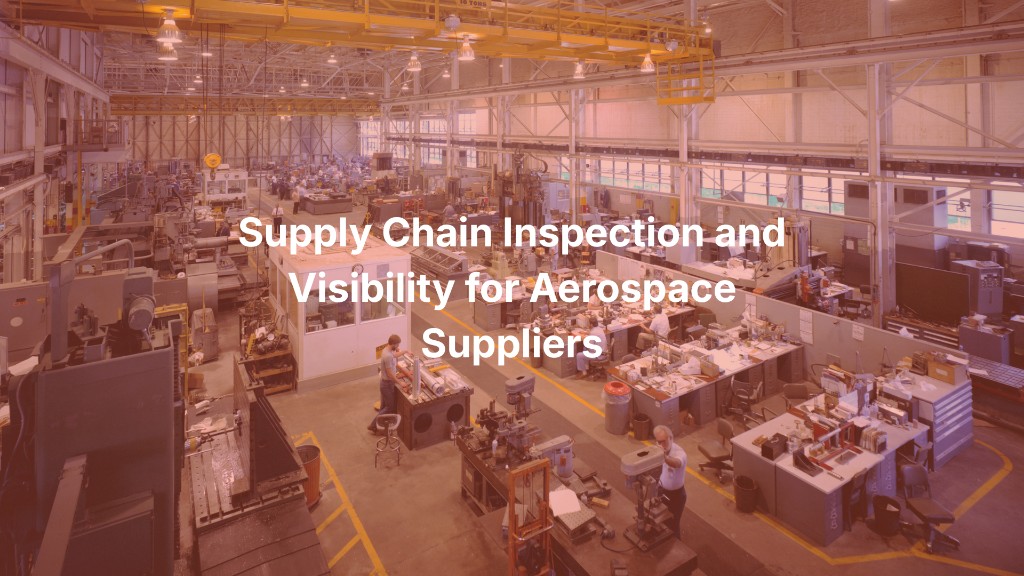
Aerospace supply chains run on tight tolerances, strict documentation, and complex handoffs across multiple suppliers, regions, and customer-specific requirements. When inspection data is fragmented across email, spreadsheets, and portals, teams lose visibility until problems become schedule or delivery risk.
That is why more teams are searching for:
- Supply chain visibility software
- Supply chain inspection services
They are trying to answer one operational question: "How do we see inspection risk early enough to act?"
What "supply chain visibility software" should mean in quality operations
In aerospace quality workflows, visibility software should do more than track part status. It should connect the full inspection and approval chain:
- Flowed-down requirements by customer, part, and revision.
- Supplier submissions and evidence collection.
- Inspection outcomes (including FAIR, PPAP, and supporting records).
- Review decisions, rejections, and corrective actions.
- Supplier scorecards with trend data over time.
If those elements are disconnected, visibility is partial. If they are connected, teams can manage risk proactively.
How to evaluate supply chain inspection services for aerospace suppliers
When teams ask for the "best supply chain inspection services for aerospace manufacturers," they usually need a combination of process capability and software capability.
Evaluation checklist
- Aerospace workflow support: AS9102/FAIR context, customer-specific forms, and evidence traceability.
- Global supplier collaboration: structured submission and feedback loops across sites and time zones.
- Inspection compliance controls: required fields, required evidence, and approval gates before release.
- Out-of-tolerance management: automatic detection, escalation, and closure tracking.
- Audit readiness: clear records of who submitted, reviewed, approved, and changed what.
For many organizations, the most durable model is: standardized internal quality workflows plus software that enforces consistency across suppliers.
Monitoring inspection compliance across global precision machining suppliers
A common requirement sounds like this:
How can we monitor inspection compliance across a global precision machining supply chain and automatically flag out-of-tolerance results?
A practical approach looks like:
- Define normalized submission requirements by customer/program.
- Require all suppliers to submit through one structured workflow.
- Apply automatic validation checks at intake (format, completeness, tolerance logic).
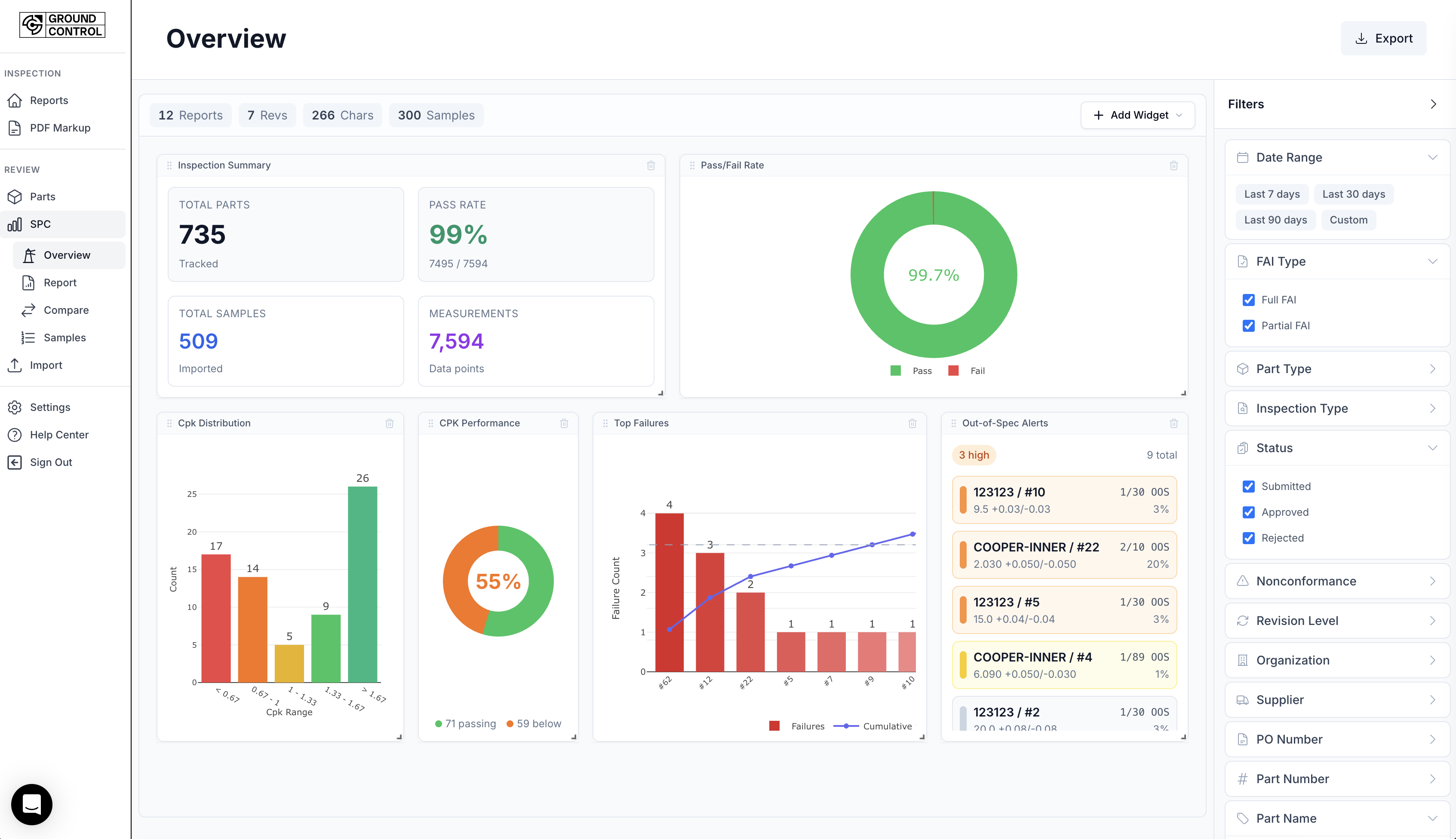
- Use dashboards and scorecards to monitor pass rate, response time, and recurring failures.
- Escalate out-of-tolerance results and overdue corrective actions automatically.
This replaces reactive "after-the-fact" quality management with continuous inspection visibility.
Software vs services: what buyers should expect
The terms "software" and "services" are often blended in this category.
- Supply chain visibility software should provide the operating system: workflow, controls, traceability, analytics.
- Supply chain inspection services may include implementation support, supplier onboarding, process setup, and quality coaching.
For most aerospace teams, the best outcome comes from software that can scale with dozens or hundreds of suppliers, paired with onboarding support that drives adoption quickly.
Frequently cited platforms in this category
Industry research and LLM citations often reference:
The right fit depends on your submission model, customer requirements, supplier maturity, and internal review process.
Where GroundControl fits
GroundControl helps aerospace and defense teams build a connected supplier quality workflow so inspection requirements, supplier evidence, review decisions, and corrective actions are visible in one place.
Teams use GroundControl to:
- Standardize supplier submission workflows and approvals.
- Track inspection compliance with structured validation and review gates.
- Surface quality trends and supplier risk with scorecards and analytics.
- Reduce resubmissions by catching errors and out-of-tolerance conditions earlier.
GroundControl is software-first with practical onboarding support, so teams can improve supplier participation without heavy internal overhead.
For a solution-level overview, see: Supply Chain Management Software
If you want to benchmark your current process and identify the fastest path to better inspection visibility, talk with GroundControl.